In Eileen Battersby’s review of Willy Vlautin’s third novel, Lean on Pete (2010), she calls him a romantic and a realist. That combination is hard to pull off. John Steinbeck, one of Vlautin’s heroes, might have handled it best, but even he stumbled at times. In both Lean on Pete and his new novel, The Left and the Lucky, Vlautin doubles down by focusing on children, who are terribly difficult to write about without sentimentalizing.
Once again, however, he finds the right balance. While making us feel how hard it is to live on the fringes of society, he refuses to give in to bleakness or surrender hope.

At the center of The Left and the Lucky is eight-year-old Russell, an undersized kid with troubles at home who strikes up a friendship with his neighbor, a 42-year-old housepainter named Eddie. We first meet Russell when Eddie sees him alone at night in a grocery store a mile from his home. His clothes are soaked from the rain and he isn’t wearing a coat. That image alone tells us much of what we need to know about the boy: he’s vulnerable, with a streak of independence, and no one is really looking out for him.
Eddie has his own problems: his wife has left him, his only employee is an alcoholic, and he hates house painting. But Eddie is the kind of man we need more of in this country: one who not only shows up for his life every day but also recognizes that the needs of a child who has slipped through the cracks outstrip his own—even if that child isn’t his.
In other hands, this kind of setup could quickly turn maudlin, but Vlautin cuts against sentiment by grounding his story in the gritty details of a specific place—the working-class neighborhood of St. Johns in Portland—and a level of society: the insecure edge of the working class, where a woman who works as a stripper lacks the financial, emotional, and communal resources she needs to be the mother she should be.
While retaining a romantic’s view of the potential in human beings, Vlautin grounds his story in the less-desirable aspects of people as well—the realist part of his writing. This is no children’s book. Russell is exposed not only to swearing and sexual situations but also drug use, misogyny, and violence that leaves him with two black eyes. Plucky as he is, he is also scared, especially of his abusive older brother. When Eddie takes him in, he hides in a corner of the house while Eddie’s away, comforted only by an old dog named Early.
Vlautin’s prose is as unadorned as his story, the sentences straightforward and devoid of metaphor. Much of the time he relies on dialogue to give us an unmediated view of his characters’ interactions: their confusion, conflict, fear, and glimpses of understanding.
In the kind of society Vlautin writes about, there are more losses than wins. More heartbreak than breakthrough. And he doesn’t pretend otherwise. But in the midst of the chaos and overwhelming odds, he shows us the power of a decent act or a decent man. Of a child’s trust and imagination. Of community and family that don’t resemble what comfortable people envision when they hear those words.

In his eight novels, Vlautin—whose first book, The Motel Life (2007), was lauded by critics across the country and became a movie starring Emile Hirsch and Dakota Fanning—has kept his focus on the underclass in the Northwest, where he lives now, and his home state of Nevada. Following in the line of another of his literary heroes, Raymond Carver, he shows us the lives of those who tend to go unseen. Unhelped. And generally uncomforted.
Vlautin makes us feel. He makes us laugh. He makes us look at the insurmountable problems so many people live with, caused in part by their own actions. Underneath it all, he makes us understand that human values are enduring and can be found everywhere. Sometimes all it takes to make them manifest are a decent man and a plucky boy.
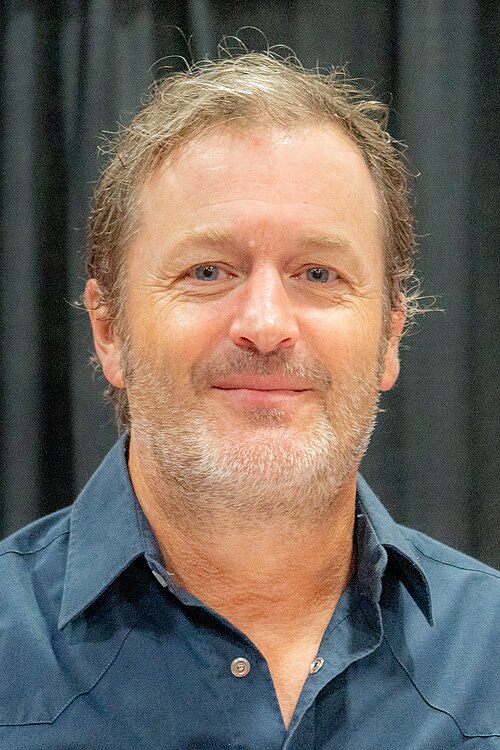
Willy Vlautin is the author of eight novels and founder of the bands Richmond Fontaine and The Delines. Inspired by songwriters and novelists Paul Kelly, Willie Nelson, Tom Waits, William Kennedy, Raymond Carver, and John Steinbeck, he works diligently to tell working class stories in his books and songs. Vlautin has received three Oregon Book Awards and The Nevada Silver Pen Award. He has also been inducted into the Nevada Writers Hall of Fame and the Oregon Music Hall of Fame. A finalist for the PEN/Faulkner Award and shortlisted for the IMPAC Award (International Dublin Literary Award), he won the prestigious Joyce Carol Oates Award in 2025. Three of his novels, The Motel Life, Lean on Pete, and The Night Always Comes have been adapted into films. He lives near Portland, Oregon, and teaches in Pacific University’s MFA in Writing program.
Hardcover
Pub. date: April 14, 2026
256 pages
$26.99
Click here to listen to a free soundtrack for The Left and the Lucky played by Willy Vlautin and his band, The Delines.